
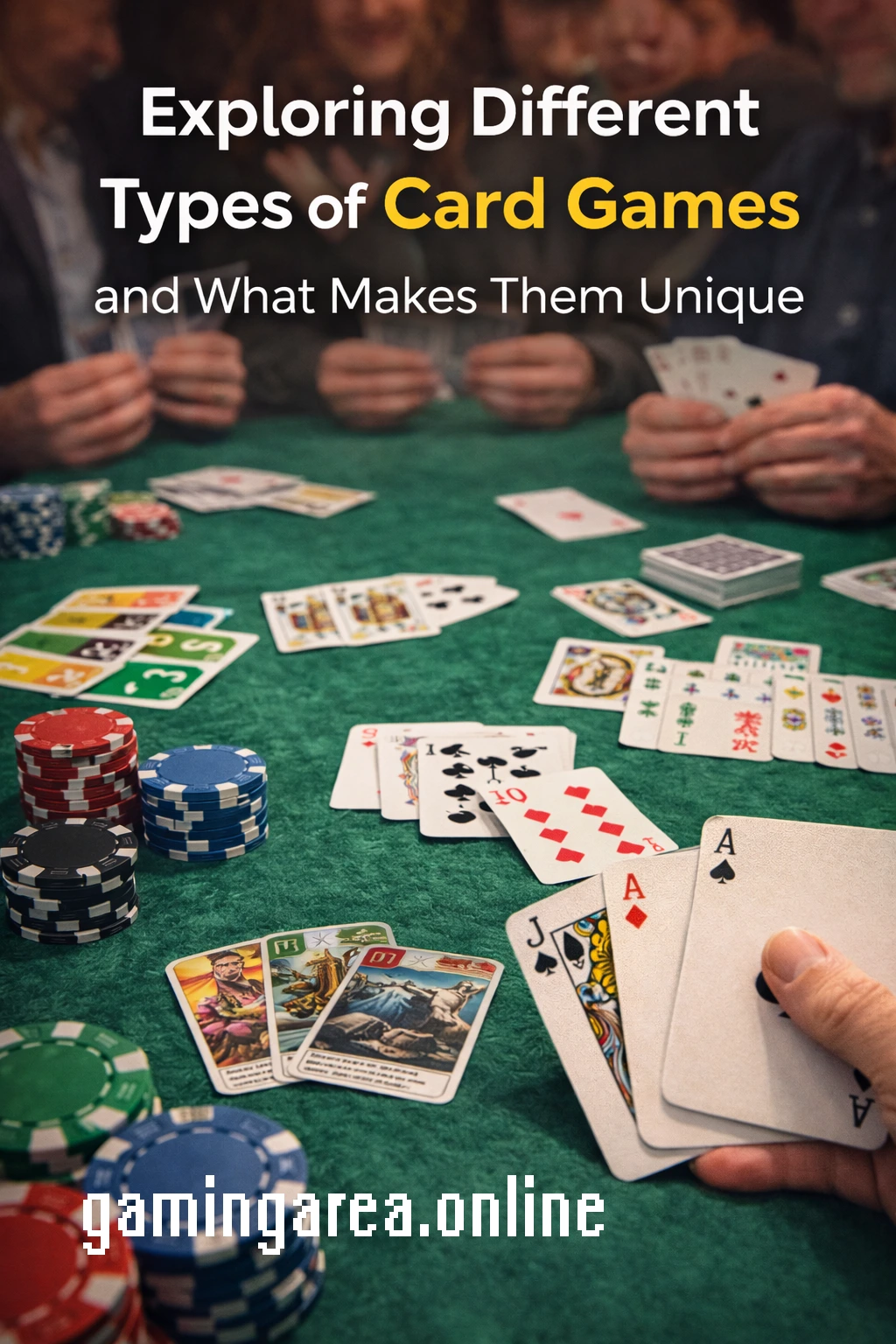
Card games come in many forms, each offering its own style of interaction and entertainment. While many people are familiar with a few popular titles, the variety available within card gaming is broader than most realize. Exploring different categories of card games can introduce new experiences, encourage social interaction, and expand recreational options.
This article looks at several types of card games and highlights what makes each category distinctive and enjoyable.
Matching and Collecting Games
Some card games focus on identifying and gathering similar cards. These games typically involve simple rules and fast-paced turns, making them accessible for beginners and players of all ages.
Characteristics
- Easy to learn
- Quick rounds
- Interactive gameplay
- Ideal for casual settings
Because they emphasize recognition and memory rather than complex strategy, these games often serve as entry points for newcomers.
Trick-Taking Games
Trick-taking games involve players competing to win rounds (or “tricks”) based on card hierarchy or suit rules. These games often require observation and planning, adding depth without becoming overly complicated.
Characteristics
- Strategic decision-making
- Structured turns
- Partner or team options
- Progressive skill development
Players who enjoy thinking ahead often find this category engaging.
Arrangement and Sequence Games
Another category focuses on organizing cards into specific patterns or sequences. These games may be played individually or in groups and often emphasize patience and careful planning.
Characteristics
- Logical organization
- Step-by-step progress
- Flexible pacing
- Relaxed atmosphere
These types of games can provide a calming experience while maintaining engagement.
Strategy-Focused Games
Some card games involve deeper planning and adaptation to evolving gameplay situations. While still recreational, they encourage players to analyze possibilities and make thoughtful choices.
Characteristics
- Dynamic situations
- Tactical decisions
- Observation skills
- Learning through repetition
This category often appeals to players who enjoy mental challenges.
Social Interaction Games
Certain card games prioritize interaction, humor, and shared participation over structured competition. These games thrive on group energy and are often played during gatherings.
Characteristics
- Conversation-driven play
- Inclusive participation
- Emphasis on fun
- Flexible rules
They are especially popular for casual entertainment and bonding.
Finding Your Preferred Style
Trying different categories helps players discover what they enjoy most. Some may prefer quick, energetic gameplay, while others enjoy thoughtful and strategic sessions. Exploring a variety of game styles encourages learning and keeps experiences fresh.
A helpful approach is:
- Experiment with multiple formats
- Play with different groups
- Reflect on enjoyment level
- Gradually explore deeper challenges
This journey often leads to a personalized gaming style.
Conclusion
Card games offer diverse experiences that suit a wide range of preferences and skill levels. From simple matching games to strategy-oriented formats, each category provides unique opportunities for entertainment and interaction. By exploring various types, players can broaden their understanding and appreciation of card gaming as a recreational activity.
Ultimately, the diversity within card games ensures that there is something enjoyable for nearly everyone willing to explore.